
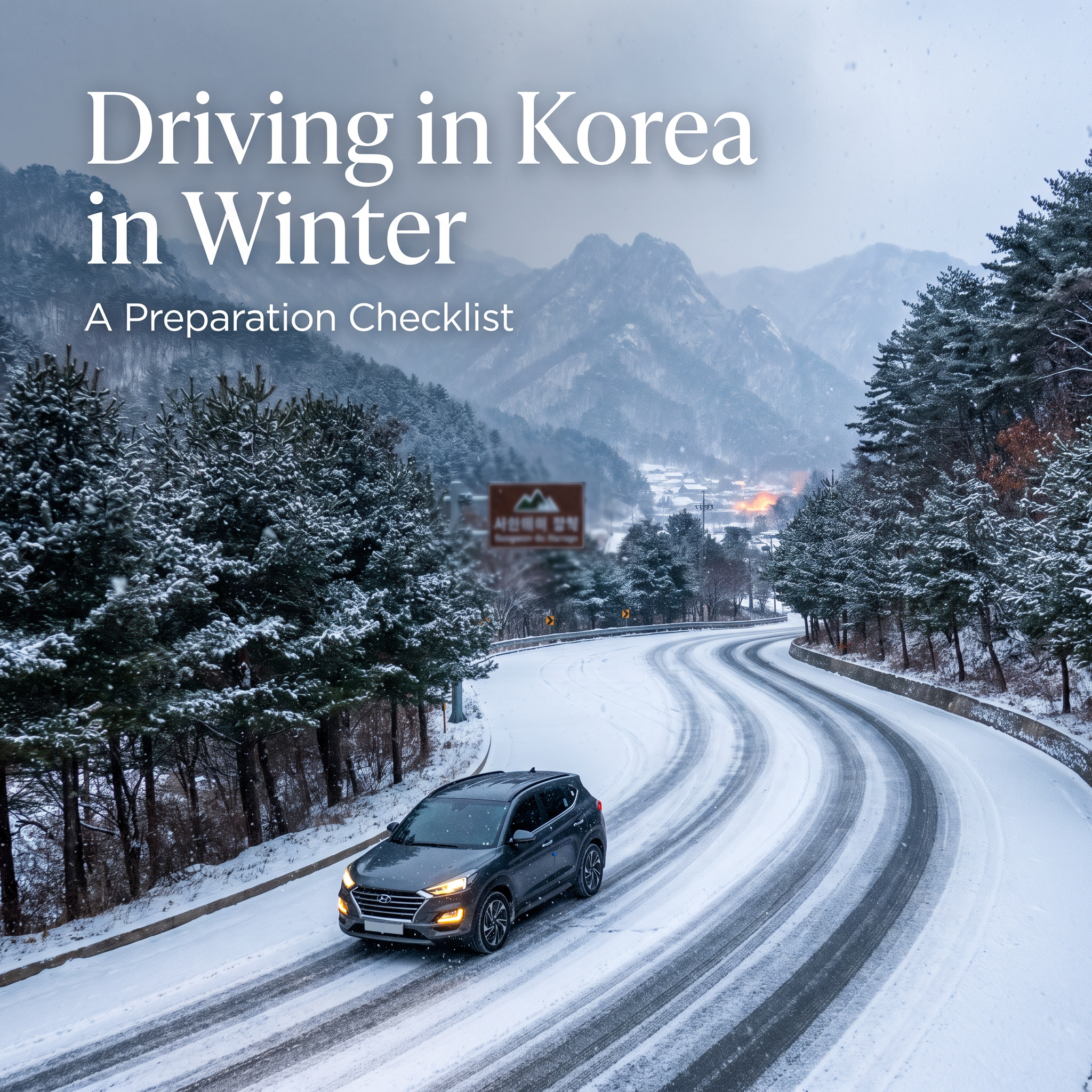
A rental car can make it easier to visit rural, coastal, or mountain areas in Korea. In winter, though, snow, freezing rain, and black ice can make the same route harder than it looks on a map. If you are unfamiliar with icy roads, consider taking public transport or a guided tour on days when snow or freezing conditions are forecast. VisitKorea specifically advises winter visitors to slow down, leave more following distance, and consider other transport during severe conditions. VisitKorea: Driving in Korea
Use this checklist before you book, at the rental counter, and before each drive.
- Confirm you are eligible to drive
Check that your license is valid for driving in Korea. VisitKorea says travelers may drive with a valid International Driving Permit (IDP) or a mutually recognized foreign license, subject to the applicable rules.
Bring your passport, original home-country driver’s license, and IDP if required for your license country.
Check the rental company’s own requirements. Rental firms may set minimum-age and driving-experience rules; VisitKorea notes that requirements vary by company.
- Confirm that the name on your reservation matches your driving documents and payment card.
Rules differ by license-issuing country and rental provider, so verify your specific situation before booking. VisitKorea rental requirements
- Choose a winter-ready rental car
When comparing rental options, ask the company:
- Are winter tires fitted, or are all-season tires supplied?
- Are snow chains or another traction device available, and are they compatible with this vehicle?
- Can staff show you how to use the equipment?
- What roadside assistance is available if weather makes the car difficult to drive?
- Is the rental permitted on the roads and in the regions you plan to visit?
Do not assume winter tires or chains are included. Confirm the equipment and its availability in writing. All-wheel drive can help a vehicle move in some conditions, but it does not remove the risk of skidding or shorten braking distance on ice.
- Read the insurance terms before pickup
Check which coverage is included, what can be added, and what is excluded. VisitKorea advises renters to confirm whether damage to the rental vehicle itself is covered, since coverage and options vary between rental companies. VisitKorea: rental insurance
Before you drive away:
- Confirm the deductible or excess you would pay after a covered claim.
- Ask whether tires, windshields, undercarriage damage, and snow-chain use are covered.
- Save the rental company’s accident and roadside-assistance number.
- Photograph the car from all sides, including existing scratches, wheels, and the windshield.
- Prepare your route and navigation
Download Naver Map or Kakao Map before setting out. VisitKorea notes that Google Maps navigation does not work in Korea in the same way as it does in many other countries, while Naver Map and Kakao Map provide navigation options. VisitKorea: navigation apps
- Save your destination’s Korean name and address in your phone.
- Check the route before driving and choose main roads where possible.
- Build in extra time for slow traffic, snow clearing, and rest stops.
- Check the forecast and road conditions again before leaving.
- Avoid relying on shortcuts through steep, narrow, or shaded roads during icy weather.
For longer drives, tell someone your route and expected arrival time. Seoul’s winter safety guidance recommends daytime travel when possible, using main roads, and sharing your destination and schedule. Seoul Metropolitan Government winter guidance
- Pack a small winter driving kit
Keep these items in the car, especially for rural or mountain routes:
- Snow chains or another compatible traction device
- Ice scraper and snow brush
- Warm gloves for clearing the car or handling equipment
- Flashlight and portable phone charger
- Warm layer or blanket
- Water and simple snacks
- Windshield washer fluid suitable for freezing temperatures
- A small shovel if you are driving outside urban areas
- Your rental documents, license, passport, and emergency contact details
Korean government snow guidance recommends checking the weather, clearing snow and ice from the vehicle, carrying winter equipment, and preparing supplies for long-distance travel. National Disaster Safety Portal: heavy snow guidance
- Inspect the car before moving
Before driving, clear snow and ice from the windshield, side windows, mirrors, lights, roof, cameras, and license plates. Snow left on the roof can slide forward when braking or blow onto another vehicle.
Then check:
- Tire condition and pressure, using the rental company’s instructions.
- That headlights, brake lights, wipers, heater, and defroster work.
- That you know how to switch on the hazard lights.
- Where the traction equipment is stored and how to access it.
- Whether the vehicle has a Hi-Pass toll tag.
If the vehicle does not have Hi-Pass, follow the rental company’s toll-payment instructions and do not enter a Hi-Pass-only lane by mistake. VisitKorea toll-road guidance
- Drive gently on snow or ice
On slippery roads, avoid sudden inputs. Accelerate, brake, and steer smoothly; increase the gap from the vehicle ahead; and reduce speed well before curves, intersections, and downhill sections. Korean winter safety guidance recommends reducing speed by 20–50% on snowy or icy roads and keeping extra following distance. Korean government winter driving guidance
Be especially cautious on:
Bridges and overpasses
Shaded roads
Tunnel entrances and exits
Steep hills and sharp curves
Roads near streams or the coast
Intersections where vehicles repeatedly stop and start
Black ice can be hard to see. If road conditions worsen, pull over only somewhere safe and legal, or turn back. Do not stop in a live lane or on an expressway shoulder unless there is an emergency.
- Know the basic road rules
Korea drives on the right side of the road, with the driver’s seat on the left; distances and speed limits are in kilometers. Seat belts are required, and using a phone while driving is unsafe and prohibited. VisitKorea’s driving guide explains local signs, left- and right-turn rules, expressway toll lanes, and other road basics. Review it before driving if you are used to driving on the left or using miles per hour. VisitKorea: driving rules
Never drive after drinking. If you are unsure whether a turn or lane is permitted, follow the road signs and markings rather than guessing.
- Make a clear decision when conditions change
Before each leg, ask:
- Is snow, freezing rain, or a sharp temperature drop forecast?
- Are roads, mountain passes, or attractions reporting closures?
- Do I have the right tires and equipment for this route?
- Am I comfortable driving in the current visibility and road conditions?
If the answer gives you pause, delay the trip or choose public transport. A rental car is useful only when the route and conditions are manageable for the driver.
- If you have an accident or get stuck
Move to a safe place if you can do so without creating more danger.
Contact the rental company and follow its instructions.
Call emergency services if anyone is injured or there is immediate danger.
Photograph the scene and vehicle damage when it is safe.
If stranded in snow, stay warm and make your location visible to rescuers; follow official emergency guidance.
VisitKorea advises contacting the rental company after an accident, documenting damage, and checking coverage before the trip. VisitKorea accident and insurance guidance
Frequently asked questions
Do I need an International Driving Permit to drive in Korea?
Many visitors need a valid IDP, while some may use a foreign license recognized under applicable agreements. Requirements also vary by rental company. Check the rule for your license country and carry your passport and original license.
Are rental cars in Korea equipped with winter tires?
Do not assume they are. Ask the rental company whether the vehicle has winter tires and whether snow chains or other traction equipment are available for your dates and route.
Is it safe to drive in Korea in winter?
It depends on the weather, route, vehicle, and your experience. Snow, ice, and black ice can make roads slippery. If you are inexperienced on winter roads or conditions are poor, choose another way to travel.
Can I use Google Maps for driving directions in Korea?
VisitKorea recommends Naver Map or Kakao Map for navigation, noting that Google Maps navigation does not work in Korea as it does in many other countries.
What should I do if it starts snowing while I am driving?
Slow down smoothly, increase your following distance, and avoid abrupt braking or steering. If visibility or traction becomes poor, stop somewhere safe or turn back rather than continuing onto a difficult route.
A safer winter road trip starts before pickup
Confirm your documents, insurance, tires, and equipment before you accept the car. Check weather and road conditions before each drive, keep your route flexible, and switch to public transport when conditions exceed your winter-driving experience.
Leave a Reply