
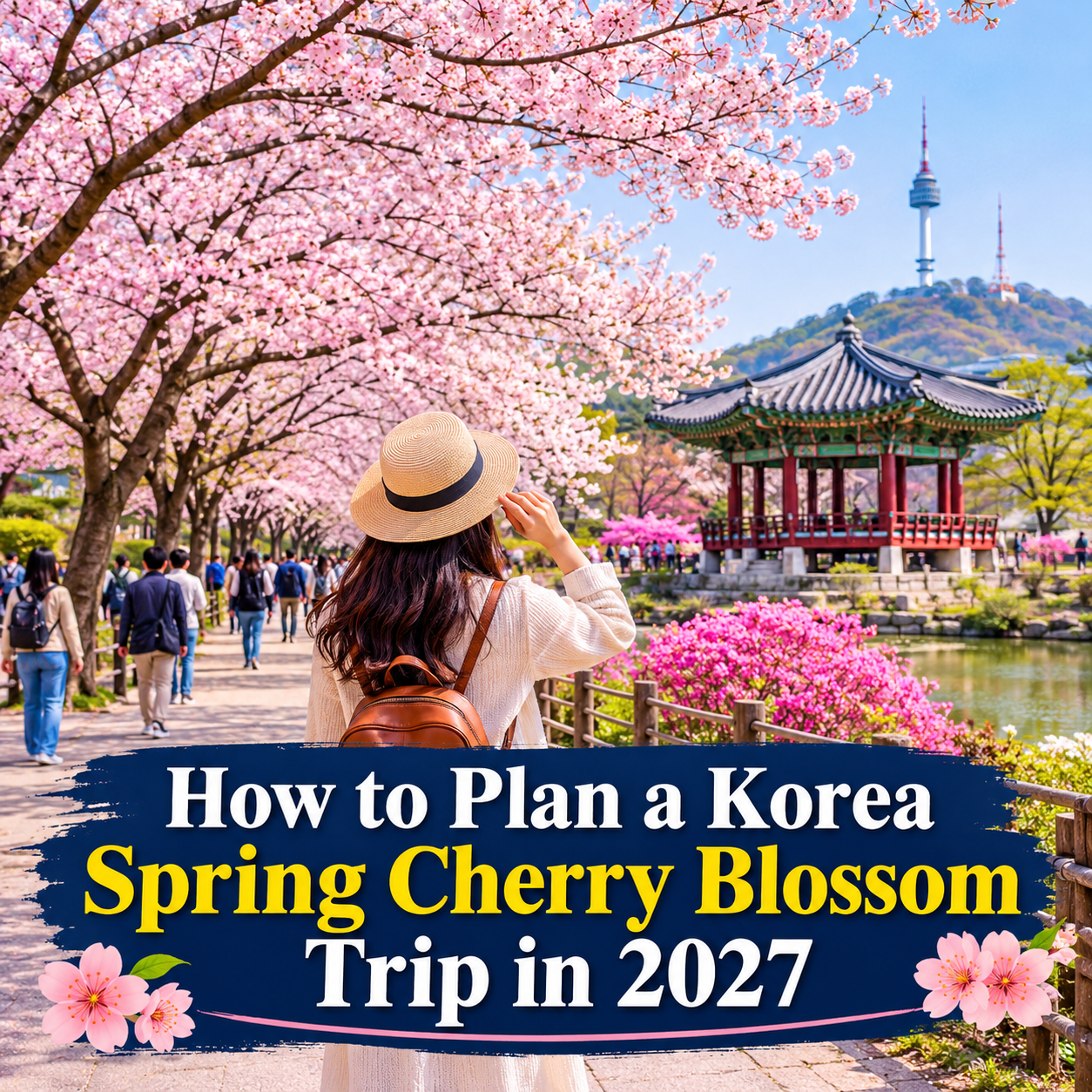
Spring is one of the most rewarding times to explore South Korea, but cherry blossom travel works best when you plan by region rather than relying on one national forecast. Jeju and the southern coast generally enter bloom before central and northern areas, while exact dates change with the weather each year. For a 2027 visit, use this guide to build a flexible route and verify local announcements closer to departure.
Prefer a guided experience? Explore private and group tours across South Korea with Layover in Korea, and compare options that fit your itinerary.
Choose the right region for your dates
Jeju, Busan, Jinhae and Gyeongju are useful southern choices to research for an earlier spring window. Seoul and nearby destinations are often better for visitors arriving later in the season. These are broad seasonal patterns, not guaranteed bloom dates: a warm or cold spell can shift flowering, and peak bloom can last only a short time.
| Area | Why consider it | Planning note |
|---|---|---|
| Jeju | Coastal scenery, island road trips and spring flowers | Check flight and ferry options and allow for weather changes |
| Jinhae | Well-known cherry blossom festival area | Expect heavy crowds and transport changes during festival dates |
| Gyeongju | Historic sites and spring scenery in one visit | Plan walking routes and local transfers between heritage areas |
| Seoul | City parks, palace surroundings and riverside walks | Use live local bloom updates before choosing the exact day |
Build a flexible 5- to 7-day itinerary
For a first visit, avoid trying to cross the entire country in a few days. Choose one base in the south and one in the capital region, or focus on a single area if your trip is short. Keep one flexible half-day in the schedule so you can move an outdoor visit if rain or wind arrives.
- Days 1–2: Arrive, settle in and explore one neighbourhood without a packed schedule.
- Days 3–4: Visit a blossom destination after checking the latest local forecast and crowd notices.
- Days 5–6: Add a cultural or food experience rather than another long-distance transfer.
- Day 7: Keep the final day close to your departure airport or station.
Transport and accommodation strategy
Reserve long-distance rail or intercity bus seats when your dates are firm, especially around weekends and festival periods. Check the exact departure station, arrival station and last return service. For smaller towns, confirm whether local buses reach the attraction you want and how frequently they operate. Staying near a station can be more useful than choosing a hotel beside a famous photo spot.
Book accommodation with a cancellation policy that suits your plans if possible. Avoid assuming that a festival shuttle, temporary road closure or event programme will be identical to the previous year. Recheck official municipal and tourism announcements before travelling.
What to pack for Korean spring
- Light layers for cool mornings and warmer afternoons
- A compact rain jacket or umbrella
- Comfortable shoes for long park and city walks
- A portable battery for maps, transport apps and photographs
- Any personal medication and a small day bag
How to avoid the biggest planning mistakes
Do not book a non-refundable trip solely around a predicted peak-bloom date months in advance. Do not assume every famous location will be at its best on the same weekend. Avoid stacking multiple distant blossom sites into one day, and check whether a festival is actually confirmed for 2027 before advertising or planning around its dates.
Frequently asked questions
When is cherry blossom season in Korea in 2027?
Exact 2027 dates are not reliable this far ahead. Southern regions usually bloom before Seoul and northern areas, but weather can shift the schedule. Check official local forecasts closer to your trip.
Which place is best for a first-time visitor?
Seoul is convenient for a city-based trip, while Gyeongju combines historic attractions with spring scenery. Jinhae is a strong festival-focused option if you are comfortable planning around crowds.
Should I visit more than one region?
Only if you have enough days to travel without rushing. A focused itinerary is usually more enjoyable than spending several hours each day changing cities.
Plan your spring visit carefully
South Korea in spring rewards flexible planning. Choose a region that fits your dates, confirm transport and accommodation, and use current local announcements for the final details. For official visitor information, start with VISITKOREA and the relevant city or festival organiser before setting out.
Explore more Korea travel guides
Continue planning with our Korea rail route guide, Seollal travel guide and seasonal packing guide.
How to follow bloom conditions without overplanning
Cherry blossom forecasts are useful for narrowing your travel window, but they are not a promise that every location will look the same on the same day. Look for updates from the local government, tourism office or festival organiser for the specific city you plan to visit. Check whether a forecast refers to the first blossoms, full bloom or the expected peak. Those stages are different, and a windy or rainy spell can shorten the most photogenic period.
Build a simple decision plan before you leave home. Choose your preferred blossom destination, identify one alternative within the same region and keep a flexible day between major transfers. This way, a change in the forecast does not force you to rebuild the entire holiday. On the day itself, check local transport notices as well as the weather; popular festivals may introduce temporary bus routes, pedestrian controls or road restrictions.
Sample route ideas for different trip lengths
For a three- or four-day visit, base yourself in one city and explore its nearby parks and neighbourhoods. In Seoul, combine a blossom walk with a palace or museum rather than spending the whole day travelling to another province. For a five- to seven-day holiday, a southern route can pair Busan with Gyeongju or Jinhae, provided you allow time for intercity transport. Jeju is better treated as its own island stay because flights, weather and road distances can affect the schedule.
Visitors with more time can travel from the south towards Seoul as the season progresses. This northbound approach may suit a flexible itinerary, but it should not be treated as a guaranteed way to follow peak bloom. Flowering varies by elevation, tree variety and local conditions. Select destinations for their wider attractions too, so the trip remains worthwhile if the blossoms are early, late or already falling.
Food, crowd and photography planning
Festival zones often have temporary food stalls, cafés and convenience stores, but queues can be long around popular viewing areas. Eat before the busiest evening period or move a few streets away from the main photo route for a calmer meal. Carry water and a small snack, especially when travelling with children or older companions. Do not rely on a single restaurant being available during a major event.
For photographs, arrive early when possible and avoid stopping in the middle of narrow paths. Never climb trees, shake branches or enter railway, road or restricted areas to get a picture. If you use a tripod, keep it out of the flow of pedestrians and follow staff instructions. Respect private homes and do not photograph people closely without permission.
Travel insurance and booking flexibility
Spring weather can disrupt flights, ferries and outdoor activities. Read the change and cancellation terms for transport, hotels and tours before payment. Consider travel insurance that matches your itinerary and personal circumstances, and keep confirmations accessible offline. For a guided day outside Seoul, check exactly what is included, the meeting point, language, walking level and return arrangements before reserving.
Leave a Reply