
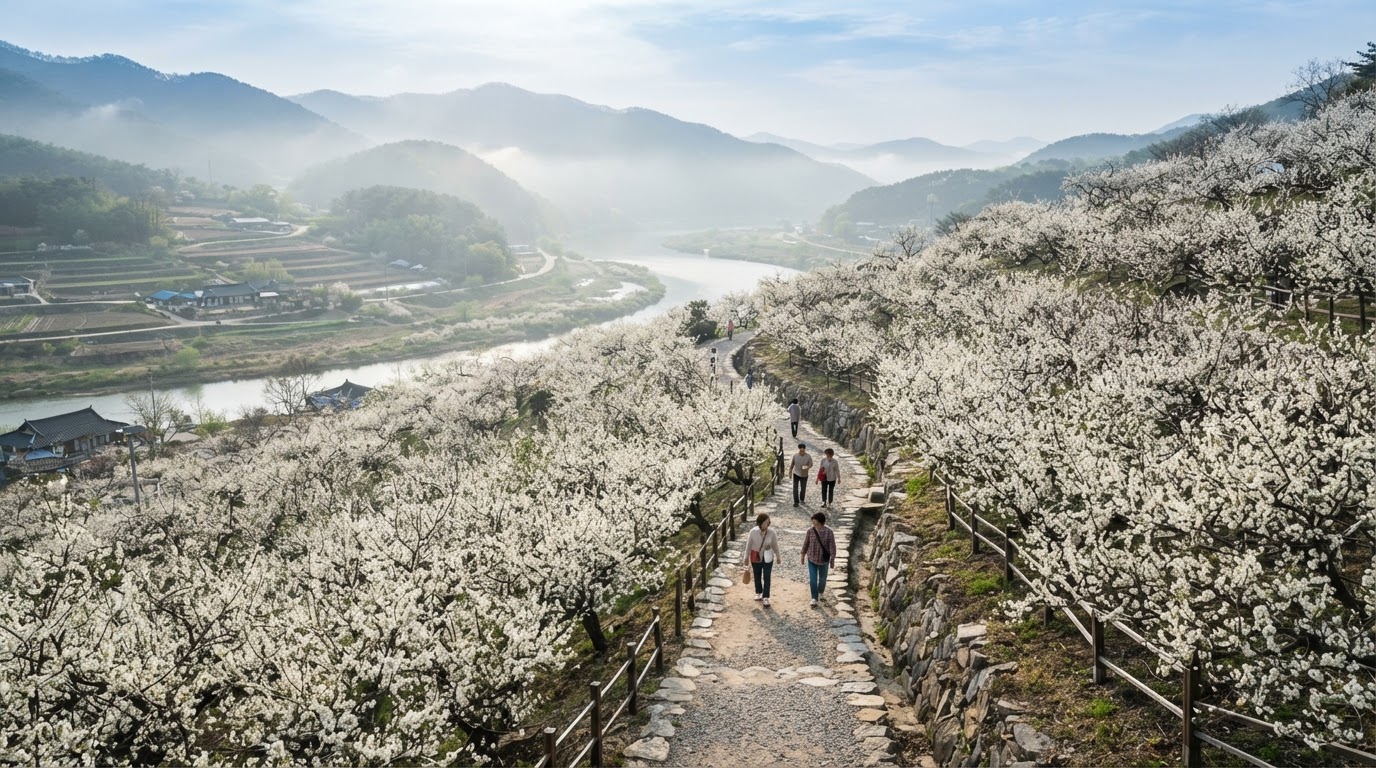
The Gwangyang Maehwa Festival celebrates the arrival of spring among the plum blossom trees of the Seomjin River area. The hillsides around Maehwa Village become a seasonal attraction, with blossom scenery, local food and regional culture.
The 2027 dates and programme must be confirmed by Gwangyang City. Bloom timing changes with weather, so the best viewing period may not match the full festival schedule.
What makes Maehwa Village special
The festival is associated with the plum blossom landscape around Maehwa Village. Visitors can walk through orchards and hillside paths, enjoy views towards the Seomjin River and sample local seasonal products.
When to visit
Plum blossoms generally appear in late winter or early spring, but exact timing varies by year and local conditions. Check official bloom updates close to your trip and avoid treating last year’s peak dates as a guarantee.
Getting there
Gwangyang is in South Jeolla Province. Public transport may involve intercity bus or rail connections followed by a local bus or taxi to the festival area. Confirm the festival shuttle, parking and traffic arrangements for the exact date.
What to do
- Walk the marked blossom routes
- photograph the orchards without entering private farmland
- try regional food
- visit local market stalls
- and leave time for the riverside scenery.
Crowd and weather tips
Popular weekends can be busy and narrow village roads may become congested. Arrive early, wear shoes suitable for uneven paths and carry layers for changeable spring weather.
Frequently asked questions
When is Gwangyang Maehwa Festival 2027?
Check Gwangyang City’s official announcement for confirmed dates and programme details.
Are the blossoms guaranteed during the festival?
No. Flowering depends on weather and can begin earlier or later than expected.
Can I visit without a car?
It may be possible using public transport and seasonal shuttles, but check the current schedule and last return service.
Before you go
Use official Gwangyang tourism updates for transport notices, bloom reports and event information. Respect private orchards and follow signed walking routes.
How to read bloom reports for Maehwa Village
Plum blossom season is an early spring event, but the best viewing period is not fixed. A local forecast may describe the first flowers, the expected full bloom or the point when petals begin to fall. These stages can differ across the village because trees grow at different elevations and receive different amounts of sunlight. Check reports from Gwangyang City or the festival organiser shortly before departure rather than relying on a date published months earlier.
If your dates are not flexible, plan to enjoy the wider countryside and local food as well as the blossoms. The walk can still be worthwhile if some trees are ahead of or behind the peak. If rain or strong wind is forecast, expect some petals to fall and be careful on muddy or sloped paths. Do not enter closed orchard areas to find a better photo location.
Photography and respectful village visits
Maehwa Village is a community and agricultural area, not only a festival backdrop. Stay on public paths, avoid stepping between trees and do not pick blossoms or fruit. Keep residential entrances and narrow lanes clear. If you photograph a farmer, vendor or resident, ask first. During crowded periods, move away from the centre of the path before stopping to take pictures and follow any temporary one-way walking routes.
For a calmer visit, arrive early and choose a route that suits your walking ability. Some parts of the village are hilly, and the combination of slopes, steps and wet ground may be tiring. Wear shoes with grip, take breaks and do not continue along an unsafe path simply to reach a viewpoint. Visitors using a stroller or mobility aid should check the current access information before travelling.
Local food and plum products
Festival stalls and nearby shops may sell regional dishes, snacks and products made with plums. Check the price, ingredients and storage instructions before buying. Plum-based drinks, preserves and sweets can contain added sugar or other ingredients, so read the label if that matters to you. If you have allergies, do not assume a product is safe because it is homemade or locally produced; ask the vendor and avoid it if the ingredients are unclear.
Food purchases can be useful souvenirs, but consider whether they can be carried without refrigeration and whether your destination country allows their import. Fresh fruit, seeds, plants and some agricultural products may face customs restrictions. Keep packaged items sealed and check your airline baggage rules if you buy liquids or glass bottles.
Transport planning for an early spring festival
Gwangyang is in South Jeolla Province and the festival area is outside the main city centre. Many visitors reach the region by intercity bus or rail connection and then continue by local transport. Confirm the actual arrival station or terminal, the location of any festival shuttle and the final return service. A bus that reaches Gwangyang does not necessarily stop at Maehwa Village. Use the official 2027 map and local transport notice for the last leg.
If you are travelling from Seoul or another distant city, compare the full door-to-door journey and consider staying overnight. Accommodation in nearby towns may reduce the pressure of a same-day return, but check the availability of evening transport and late check-in. If using a taxi, save the Korean name of the festival area and agree on a clear pickup point for the journey back.
Suggested pace for a day in the area
Start with the main blossom walk while you have energy and before crowds become dense. Take a meal break, visit a local product stall and then choose one nearby viewpoint or riverside stop if time permits. Do not add multiple distant attractions without checking transfer times. A simple plan leaves room for photographs, rest and changes in weather.
Before leaving, confirm the festival date, bloom report, parking and shuttle arrangements, road restrictions and weather notices through Gwangyang City’s official information. Keep a flexible return plan, respect working orchards and remember that the natural flowering period can change independently of the event programme.
Official sources and related reading
Festival dates, venues, ticket conditions and programme details can change between editions. Use the organiser and Korea Tourism Organization information below for confirmation before booking or travelling.
Leave a Reply