
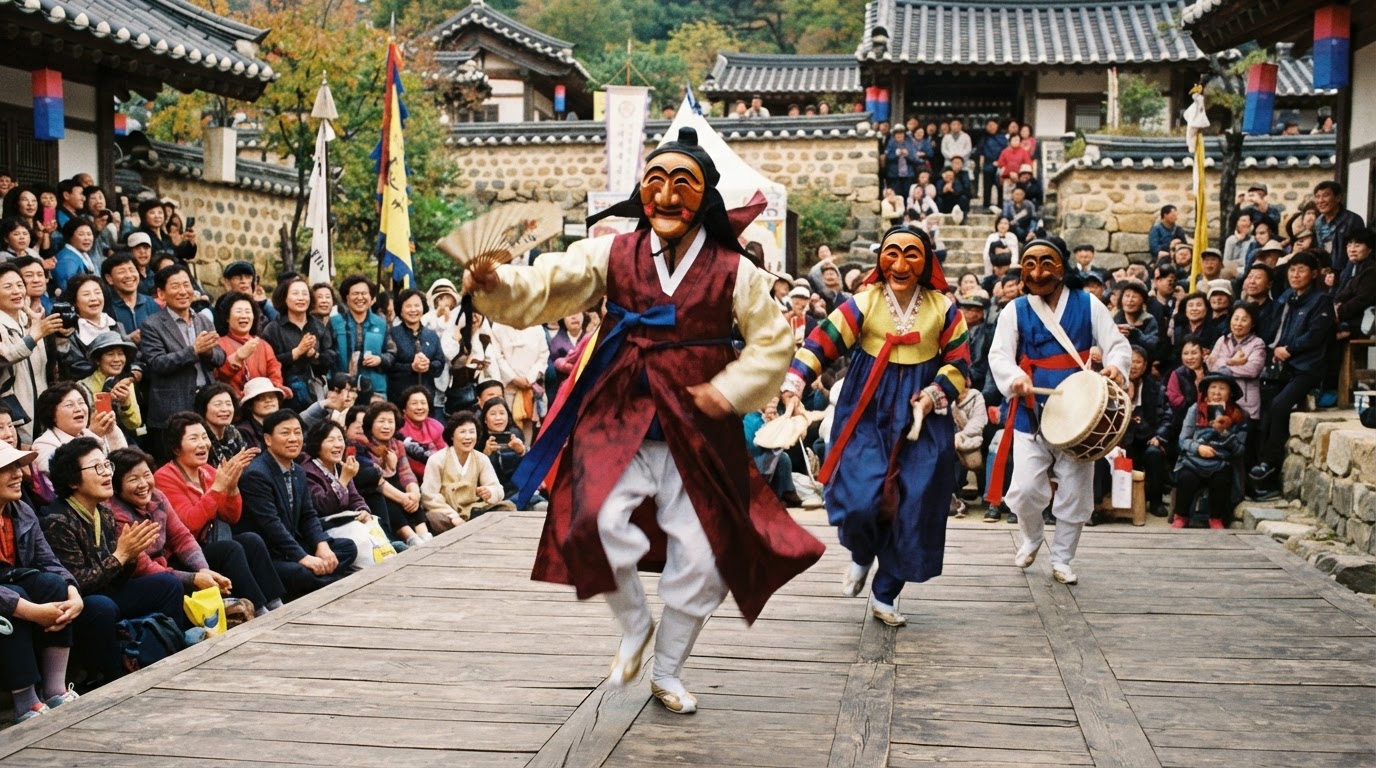
Andong is an important destination for visitors interested in Korean heritage, and its mask dance festival introduces audiences to talchum traditions through performances and cultural activities. The event can be an engaging way to understand regional performance styles and storytelling.
Check the official 2027 festival announcement for dates, venues, international performance details and ticket arrangements. The festival programme and locations may change from year to year.
What is talchum?
Talchum refers to Korean mask dance drama traditions that combine masks, movement, music, humour and social commentary. Different regions have their own styles and characters, so performances can vary considerably.
What to see
The programme may include traditional mask dance performances, visiting troupes, parades, mask-making workshops and cultural demonstrations. Check performance descriptions to understand whether a show is traditional, contemporary or family-oriented.
Andong Hahoe Folk Village
Hahoe Folk Village is a major heritage attraction near Andong and is associated with Hahoe Byeolsingut Talnori. Check transport, opening hours and performance schedules separately from the festival timetable.
Getting to Andong
Andong can be reached by rail and intercity bus from major Korean cities. Check the exact station or terminal and plan the local transfer to festival venues or Hahoe Village. Do not assume every performance takes place in the same location.
Cultural etiquette
- Arrive before performances begin
- avoid blocking the audience
- follow photography rules
- do not touch masks or costumes without permission
- and respect the cultural context of ritual or heritage presentations.
Frequently asked questions
When is Andong Mask Dance Festival 2027?
Use the official festival announcement for confirmed dates.
Can international visitors enjoy the performances?
Many performances are visual and can be appreciated without fluent Korean, although programme notes or a guide can add cultural context.
Can I visit Hahoe Village on the same day?
It may be possible, but check travel time and performance schedules before combining them.
Plan a heritage-focused trip
Check Andong’s official tourism and festival information for updated programme details, venue maps and transport. Give yourself enough time to appreciate the performances and the wider cultural setting.
Learn about regional mask traditions
Talchum is a form of Korean mask dance drama that uses masks, movement, music and character-based scenes to tell stories. The tradition is not identical across the country. Different regions developed their own characters, performance rhythms and local meanings. Some scenes use humour and satire to comment on social behaviour, class or authority, while other parts connect with seasonal customs and community identity. The Andong festival can introduce visitors to this wider tradition through performances and cultural programmes.
For visitors who do not speak Korean, the masks, gestures and music can still make a performance engaging. However, programme notes or a guide can help explain why a character behaves in a particular way and what a scene is commenting on. Look for official English descriptions, introductory sessions or interpretation at the venue. Avoid assuming that a contemporary performance and a traditional ritual presentation have the same purpose.
Build a schedule around confirmed performances
When the 2027 programme is released, identify the performances, parades, workshops and cultural demonstrations that interest you. Some events may be open to the public while others require a ticket, reservation or separate fee. Check the duration, age guidance, language support and exact venue. If several stages operate at once, use the organiser’s map to avoid missing the beginning of a show while travelling between sites.
Arrive before the performance begins and choose a place that does not obstruct the audience. Follow photography rules and avoid using flash where prohibited. Do not touch masks, costumes or ritual objects unless a workshop leader invites you to do so. Some activities may involve audience participation, but wait for clear instructions before entering a performance area.
Explore Hahoe Folk Village with respect
Hahoe Folk Village is a major heritage destination near Andong and is closely associated with the Hahoe mask dance tradition. It is a living cultural landscape as well as a visitor attraction. Check the current opening hours, ticket arrangements, shuttle or local bus schedule and performance timetable separately from the main festival. The village is outside central Andong, so allow enough time for the transfer and walking route.
Follow public paths and remember that homes and community spaces are part of the village. Keep noise low, do not enter private buildings and ask before photographing residents. If you want to understand the historical setting, allow time for interpretation displays or a guided explanation. A short visit focused only on photographs may not show the cultural context that makes the village important.
Getting to Andong and staying overnight
Andong is reachable by rail and intercity bus from major Korean cities. Choose between them based on your starting point, schedule and the location of your accommodation. Confirm the exact station or terminal and the onward connection to the festival venue. For Hahoe Folk Village, check the local bus or shuttle frequency and the last return departure. Do not assume a taxi will be immediately available at a rural attraction.
An overnight stay can make it easier to attend evening events and visit the village without rushing. Check your hotel’s location, check-in hours and cancellation terms. If you are continuing to another city the following morning, leave enough time to reach the station or terminal and collect your luggage. Save the Korean address of the hotel for local transport.
Food, weather and cultural etiquette
Andong has a distinctive regional food culture. Ask about ingredients and preparation if you have allergies or dietary requirements, and check prices before ordering. Wear comfortable shoes for walking between venues and bring a weather-appropriate layer. If outdoor performances are affected by rain, follow the organiser’s notice rather than trying to reach a closed location.
Use Andong’s official tourism and festival channels for confirmed dates, performance details, maps and transport updates. Treat talchum as a living cultural tradition and show respect to performers, residents and other visitors. A little preparation will help you enjoy both the festival and the heritage setting around Andong.
Official sources and related reading
Festival dates, venues, ticket conditions and programme details can change between editions. Use the organiser and Korea Tourism Organization information below for confirmation before booking or travelling.
Continue planning with these related Bora Travels World guides:
Leave a Reply