
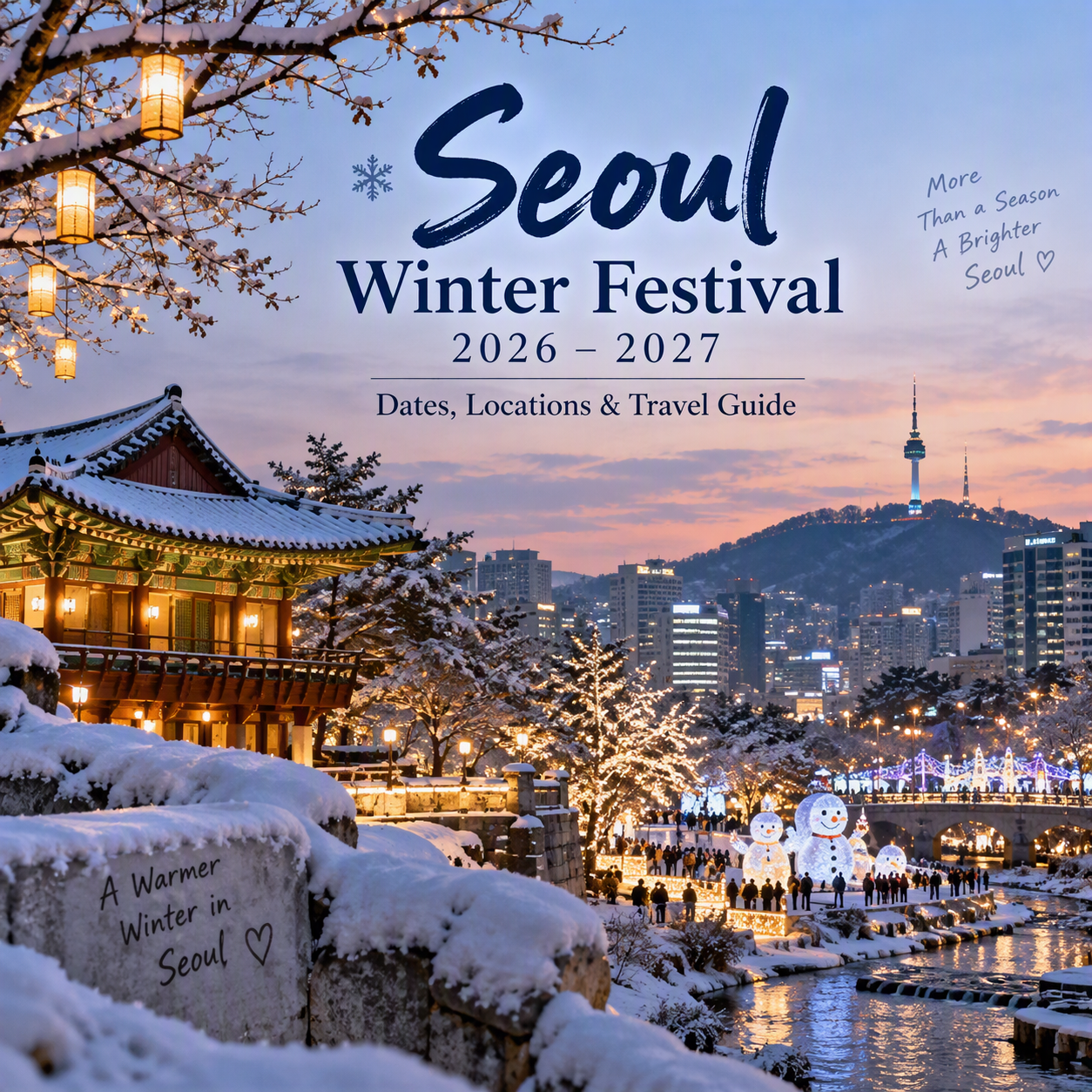
Planning a winter trip to Seoul? The Seoul Winter Festival 2026 brings seasonal light displays, media art, cultural programmes and winter activities to several well-known places in the city. The main festival is listed for December 11, 2026 to January 31, 2027, with individual attractions operating on their own schedules.
It is a good opportunity to see central Seoul after dark, enjoy the winter atmosphere and combine festival stops with historic sights, shopping and Korean food. This guide focuses on dates and details published by Seoul’s official festival portal, and explains what visitors should check before setting out.
🇰🇷 Planning Your South Korea Trip?
Discover private and group tours featuring South Korea’s beautiful destinations, famous attractions, cultural experiences and much more. Browse the available itineraries and choose an experience that fits your travel plans.
Discover Tours & Experiences in Korea – layoverinkorea.com
Seoul Winter Festival 2026–2027: Dates at a Glance
Seoul’s official festival portal lists the 2026 Seoul Winter Festival from December 11, 2026 through January 31, 2027. The programme brings together several events and locations rather than one single ticketed venue.
- Main festival period: December 11, 2026–January 31, 2027
- Main area: Central Seoul, including Gwanghwamun Square, Cheonggyecheon, Seoul Plaza and Dongdaemun Design Plaza (DDP)
- Types of activities: Light displays, media art, seasonal market activities, cultural programmes and ice skating
- Admission: Entry conditions differ by programme. Do not assume every activity is free or that every event runs for the full festival period.
Official date source: Seoul Winter Festival – Seoul Metropolitan Government festival portal.
1. Gwanghwamun Square: A Central Festival Stop
Gwanghwamun Square is one of central Seoul’s best-known public spaces, set in front of the historic Gyeongbokgung Palace area. It is one of the main locations associated with the Seoul Winter Festival programme.
The official festival description lists Seoul Light Gwanghwamun, featuring media-facade displays and light artworks, as well as Gwanghwamun Market, with seasonal goods, food stalls, photo spots and visitor activities. These are separate programme elements, so check their individual schedules before planning your visit.
Gwanghwamun is easy to combine with nearby sights such as Gyeongbokgung Palace, the National Museum of Korean Contemporary History and the streets around Jongno. If you plan to visit a palace, check its opening day and last admission time separately.
Visitor tip: Consider arriving in the late afternoon. You can explore the surrounding area in daylight and stay into the evening if the light programme is operating. Exact show times should be checked on the official event page closer to your visit.
2. Cheonggyecheon Stream: Seoul Lantern Festival
Cheonggyecheon is a restored urban stream running through central Seoul. During winter festival seasons, the area has hosted the Seoul Lantern Festival, with illuminated artworks and installations along sections of the stream.
The 2026 Seoul Winter Festival listing includes the Seoul Lantern Festival as part of its programme. Before travelling, use the official festival portal to confirm the exact section, operating dates, access points and evening hours for the 2026–2027 edition. Do not rely on last winter’s dates or display layout as a guarantee for this year.
Allow time for a relaxed walk and wear shoes with good grip. Paths beside the stream can feel colder than indoor areas, and surfaces may be slippery in winter weather.
3. Seoul Plaza Ice Skating Rink
If you want to add an active winter experience to your Seoul visit, the Seoul Plaza Ice Skating Rink is a practical option near Seoul City Hall.
The official Seoul festival portal currently lists the rink season as December 18, 2026 to February 9, 2027. The published fee is ₩1,000 for a one-hour session, including skate and safety-equipment rental. The listed operating hours are Sunday to Thursday, 10:00 a.m.–9:30 p.m., and Friday and Saturday, 10:00 a.m.–12:30 a.m. Special hours apply on Christmas Eve and New Year’s Eve. Schedules can change because of weather, air quality or operational decisions.
There are separate arrangements for children and beginner lessons, according to the official listing. Check session availability and any booking instructions before travelling, especially on weekends and public holidays.
Official information: Seoul Plaza Ice Skating Rink – dates, hours and fees.
4. Dongdaemun Design Plaza (DDP): Seoul Light DDP
Dongdaemun Design Plaza, commonly called DDP, is a distinctive cultural and design complex in eastern central Seoul. Its curved architecture makes it a recognisable landmark, and it is included among the Seoul Winter Festival’s programme locations.
The festival portal lists Seoul Light DDP, with media-facade content and seasonal programming. The official programme also mentions Christmas-town and New Year-related elements. The precise display dates and times can differ from the overall festival period, so check the latest DDP event information before making a special trip.
DDP is also a useful indoor stop if the weather is particularly cold. Check the opening hours of individual exhibitions, shops and facilities separately, as they may not follow the same schedule as outdoor displays.
5. Bosingak: New Year’s Eve Bell-Ringing Ceremony
Bosingak Pavilion in Jongno is associated with Seoul’s traditional New Year’s Eve bell-ringing ceremony. The event is part of the city’s year-end celebrations and is included in the official Seoul Winter Festival programme description.
If you hope to attend on December 31, expect a busy public gathering and check the city’s latest announcements for event timing, access arrangements, road restrictions and crowd-safety guidance. Public transport may operate on adjusted schedules during the holiday period.
Plan your route home before the event begins. Keep your phone charged, agree on a meeting point if travelling with others and follow instructions from event staff and local authorities.
How to Plan a Seoul Winter Festival Evening
Central Seoul’s festival locations are spread across several neighbourhoods. Rather than trying to visit everything in one evening, choose a small number of nearby stops and leave enough time for walking, meals and public transport.
- Start at Gwanghwamun: Explore the square and nearby historic district. Visit the market or light programme if it is operating.
- Continue towards Cheonggyecheon: Check whether the lantern displays are running and which stream entrances are open.
- Choose one additional stop: Visit Seoul Plaza for skating on a separate time slot, or travel to DDP if its light programme fits your schedule.
- Keep New Year’s Eve separate: If attending the Bosingak ceremony, plan around crowd controls and transport changes rather than trying to fit in a full sightseeing day.
Getting Around the Festival Locations
Seoul’s subway system is generally a convenient way to travel between the central festival areas. Nearby stations include Gwanghwamun, City Hall, Jonggak and Dongdaemun History & Culture Park, but the best station depends on the exact venue entrance and any temporary event restrictions.
- Gwanghwamun Square: Gwanghwamun Station (Line 5) is a convenient nearby station.
- Seoul Plaza: City Hall Station (Lines 1 and 2) is beside the plaza.
- Cheonggyecheon: Several subway stations serve different sections of the stream. Check the entrance closest to the display you want to see.
- DDP: Dongdaemun History & Culture Park Station (Lines 2, 4 and 5) serves the area.
- Bosingak: Jonggak Station (Line 1) is nearby, but access may be restricted during the New Year event.
Use a current Korea-focused navigation app such as Naver Map or KakaoMap to check walking routes, station exits and public-transport changes. During large events, follow temporary signs and instructions from staff rather than relying only on a saved route.
What Is the Weather Like in Seoul in December and January?
Seoul’s winter is cold, and temperatures can fall below freezing, particularly at night and in January. Wind can make outdoor festival areas feel colder than expected. Conditions vary from day to day, so check the forecast shortly before your trip instead of relying on a monthly average.
For an outdoor evening, consider packing:
- A warm insulated coat
- Thermal base layers and comfortable mid-layers
- Gloves, a scarf and a warm hat
- Comfortable shoes with good grip
- Warm socks and lip balm or moisturiser
- A portable power bank, as cold weather can affect phone battery performance
If you are visiting from a warmer country, give yourself time to adjust to the cold. Plan indoor breaks at cafés, museums or shopping centres rather than staying outside for several hours without a warm-up stop.
Where to Stay for the Seoul Winter Festival
For a first visit, staying near a subway station is often more useful than choosing accommodation only because it is close to one festival venue. These areas can be convenient starting points:
- Myeongdong and Euljiro: Convenient for shopping, restaurants and access to central Seoul.
- Jongno and Insadong: Useful for visitors interested in historic streets, palaces and Gwanghwamun.
- City Hall: Close to Seoul Plaza and within reach of several central attractions.
- Dongdaemun: A practical base for shopping and access to DDP, with subway connections to other areas.
Compare the nearest station, airport transfer route, room size, cancellation conditions and late-night transport options before booking. Hotel prices and availability can rise around Christmas and New Year, so check your dates early.
Other Things to Do in Seoul During Winter
The winter festival can be one part of a wider Seoul itinerary. Depending on your interests and the weather, you could also consider:
- Gyeongbokgung Palace: Explore an important historic palace. Check the official opening schedule and note that palace hours and closures are separate from festival timings.
- Insadong: Browse traditional-style shops, tea houses and craft stores.
- Myeongdong: Explore beauty shops, fashion stores, restaurants and seasonal street-food stalls.
- Starfield Library at COEX: Visit this indoor library space and explore the surrounding shopping complex. Treat any special Christmas display as unconfirmed unless the venue announces it.
- National museums: Consider an indoor cultural visit on especially cold or windy days, checking each museum’s current opening hours.
Practical Tips Before You Visit
- Check each event separately. The overall festival dates do not mean every attraction operates every day.
- Recheck schedules close to your visit. Outdoor displays and skating sessions may change because of weather, air quality or operational reasons.
- Expect crowds at peak times. Weekends, Christmas and New Year’s Eve can be particularly busy.
- Keep your belongings secure. Be mindful of bags and valuables in crowded public spaces.
- Dress warmly. You may spend longer outdoors than expected while walking between displays.
- Allow extra travel time. Road closures and crowd-management measures can affect routes during major events.
- Check payment and entry rules. Some activities may require a ticket, reservation or separate payment even when nearby public displays are free.
Frequently Asked Questions
When is the Seoul Winter Festival 2026?
Seoul’s official festival portal lists the main 2026–2027 festival period as December 11, 2026 to January 31, 2027. Individual programmes have their own operating dates.
Where does the Seoul Winter Festival take place?
The programme includes several central Seoul locations, such as Gwanghwamun Square, Cheonggyecheon, Seoul Plaza, DDP and the Bosingak area. Check the official programme for the latest venue details.
Is the Seoul Winter Festival free?
Admission depends on the activity. Some outdoor public displays may be free to view, while other activities have separate fees or entry arrangements. The Seoul Plaza ice rink is listed at ₩1,000 for a one-hour session, including skate and safety-equipment rental.
When does the Seoul Plaza ice rink open?
The official listing gives the 2026–2027 season as December 18, 2026 to February 9, 2027. Check the rink’s page for current session times and any weather-related changes.
Does every festival attraction run until January 31?
No. January 31 is the listed end date for the overall festival period. Individual programmes, markets and displays can start or finish on different dates.
What should I wear to the Seoul Winter Festival?
Wear a warm coat, layers, gloves, a scarf and comfortable shoes. Check the weather forecast before going out, especially if you plan to spend the evening walking outdoors.
Is Seoul worth visiting in winter?
Winter can be a rewarding time to visit if you enjoy seasonal lights, cultural attractions, shopping and winter activities. It is important to prepare for cold weather and verify event schedules before travelling.
Official Sources and Useful Links
Event information can change. For the most reliable updates, check the organiser’s pages before setting out:
- Seoul Winter Festival – official festival listing
- Seoul Plaza Ice Skating Rink – official dates, hours and fees
- Seoul Metropolitan Government – English information
- Korea Tourism Organization – Visit Korea
Information checked on October 31, 2026. Event schedules, admission conditions and operating hours may be updated by the organisers. Confirm the latest details through the official links before travelling.
Leave a Reply