
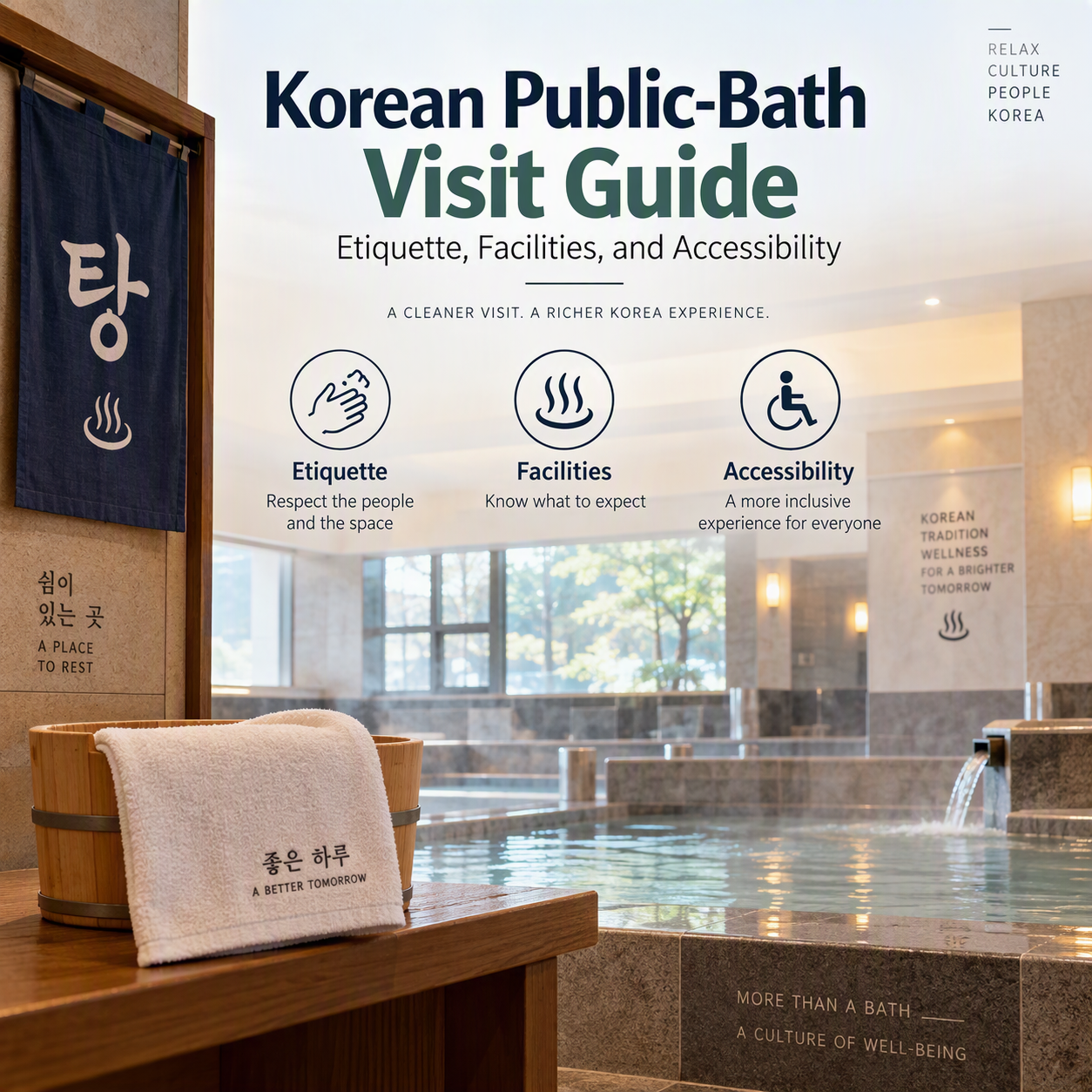
Visiting a Korean public bathhouse or jjimjilbang can be a memorable way to experience everyday Korean culture. These facilities offer more than hot-water baths: depending on the venue, you may find saunas, heated relaxation rooms, sleeping areas, snack counters, and places to unwind after a busy day of sightseeing.
For first-time visitors, the unfamiliar locker system and bathing etiquette can feel confusing. The good news is that the process is generally straightforward once you understand the difference between the bathing area and the shared relaxation spaces.
This guide explains what to expect, what to bring, how to behave respectfully, and what to check before visiting.
Understanding Korean Bathhouses and Jjimjilbangs
Although the terms are sometimes used interchangeably, a traditional bathhouse and a large jjimjilbang are not always the same experience.
Mogyoktang: The bathing area
A mogyoktang (목욕탕) is a traditional public bathing area. Facilities commonly include individual washing stations, shared hot and cold soaking pools, and sometimes steam or sauna rooms.
Bathing areas are normally separated by gender, and visitors are generally expected to be nude within the bathing section. Swimsuits are usually not worn in the shared soaking pools, although you should follow the specific facility’s posted rules.
Jjimjilbang: The relaxation complex
A jjimjilbang (찜질방) is a Korean-style sauna and relaxation complex. Larger facilities may include heated rooms, communal lounges, sleeping areas, restaurants, entertainment spaces, and traditional bathing facilities.
The common areas are generally mixed-gender. Visitors usually wear the facility-provided shirt and shorts, known as jjimjilbok (찜질복).
Not every venue offers every amenity. A small neighborhood bathhouse may focus mainly on washing and bathing, while a large complex may offer several hours of relaxation and entertainment.
How Entry and Lockers Work
Most facilities use a reception desk, shoe lockers, and a separate changing-room locker system.
- Pay at reception. Confirm the entry price and whether it includes access to all areas, towels, clothing, and overnight use.
- Store your outdoor shoes. Place your shoes in the designated shoe locker and follow the instructions for keeping or exchanging the key.
- Collect your changing-room key. The key may be attached to a wristband or electronic device. Keep it secure throughout your visit.
- Change in the appropriate area. The bathing and changing areas are gender-separated. If you are visiting a mixed-gender relaxation area, change into the provided uniform as directed.
- Check the payment procedure. Some venues record purchases against your wristband and ask you to settle the balance when leaving. Others use different payment systems.
If you are unsure where to go, show your locker key or ticket to reception and ask for directions. Staff are accustomed to helping visitors who are unfamiliar with the layout.
How much does a visit cost?
Prices vary by location, facility size, time of day, and length of stay. An estimate of ₩7,000–₩20,000 may fit some facilities, but it should not be treated as a current nationwide price guarantee.
Before travelling, check the venue’s official listing for entry fees, overnight charges, weekend rates, towel availability, and extra services. Body scrubs, massages, food, drinks, and premium facilities may cost extra.
Bathing Etiquette and Hygiene
The most important rule is simple: wash thoroughly before entering shared soaking water.
Wash before soaking
Use the washing stations to clean and rinse your body before entering a shared pool. These stations may have stools, handheld showers, soap, and mirrors.
If you are accustomed to showering while standing, the seated washing arrangement may be unfamiliar. Follow the local setup, keep your belongings tidy, and rinse the area after use.
Keep towels out of the bathwater
Use towels as directed by the facility. Avoid putting towels, soap, shampoo containers, or other personal items into shared pools.
Tie up long hair so it does not fall into the water. Do not shave, wash clothing, or apply personal products in the soaking pools.
Respect privacy
Do not take photographs or record videos in changing rooms, bathing areas, or other spaces where visitors expect privacy. Keep your voice at a considerate volume and avoid staring at other bathers.
Follow posted instructions about pool use, sauna access, and any age restrictions.
Tattoos: Check before visiting
Tattoo policies differ between facilities. Some venues permit tattoos, while others may impose restrictions or ask visitors to cover them. Do not assume that every modern spa accepts tattoos or that every traditional bathhouse prohibits them.
If you have visible tattoos, contact the venue before visiting, especially if the facility’s rules are not published in English.
What to Bring
Many bathhouses supply basic towels and washing products, but the exact arrangement varies.
- Personal skincare products or toiletries you prefer.
- A hair tie or clip if you have long hair.
- A small bag for personal items.
- Glasses storage or a protective case, if needed.
- Payment for entry and optional purchases.
Check whether the venue supplies towels, shampoo, body wash, and a bathing uniform. Do not assume all amenities are included in the admission fee.
Food and Relaxation Areas
Large jjimjilbangs often have snack counters or restaurants. Two familiar refreshments are sikhye (식혜), a sweet rice drink, and maekbanseok gyeran (맥반석 계란), eggs cooked using heated stones.
Other facilities may offer noodles, drinks, meals, lounges, or heated rooms at different temperatures.
If you use a sauna or hot room, start with a short stay and leave if you feel dizzy, weak, nauseated, or uncomfortably hot. Drink water and allow yourself to cool down between sessions. Avoid combining prolonged heat exposure with dehydration or alcohol.
People with medical conditions affected by heat, those who are pregnant, and anyone unsure whether sauna use is suitable for them should seek individualized medical advice before using high-temperature rooms or hot pools. Never treat a sauna as a test of endurance.
Accessibility and Planning Ahead
Accessibility varies significantly between bathhouses and large spa complexes. Some have lifts and accessible toilets; others may have stairs, wet floors, narrow changing areas, or steps into pools.
If you use a wheelchair or have limited mobility, contact the venue in advance and ask specific questions:
- Is the entrance step-free?
- Are lifts available to all floors?
- Is there an accessible toilet or changing space?
- Are pool steps, handrails, or transfer assistance available?
- Can staff explain the facility layout in English?
Also check the venue’s opening hours, last admission time, overnight rules, age restrictions, and whether advance booking is required.
A Simple First-Visit Checklist
Before you go, confirm the entry fee and rules. At reception, ask how the lockers and payment system work. In the bathing area, wash before soaking and respect privacy. In the common area, wear the provided clothing and follow the facility’s instructions.
You do not need to know every custom in advance. A polite attitude, careful attention to signs, and a willingness to ask staff for help will make the experience much easier.
Frequently Asked Questions
Do I have to be nude in a Korean public bath?
In the traditional gender-separated bathing area, nudity is generally expected and swimsuits are usually not permitted. The mixed-gender jjimjilbang common areas normally require the provided clothing. Follow the rules of the individual venue.
Can tourists visit a jjimjilbang?
Yes. Many facilities welcome visitors, including international tourists. Check age restrictions, opening hours, language support, and entry requirements before travelling.
Are towels and toiletries provided?
Many facilities provide basic towels and washing products, but this varies. Confirm what is included before your visit.
Can I sleep overnight?
Some large jjimjilbangs offer overnight access or sleeping areas, but not all bathhouses do. Check overnight fees, closing periods, and whether sleeping areas are available.
Are tattoos allowed?
Policies differ by venue. Contact the facility in advance if you have tattoos and cannot find a clear policy.
Final Thoughts
A Korean bathhouse or jjimjilbang can be an enjoyable cultural experience when you understand the layout and follow local etiquette. Wash before soaking, respect privacy, wear the required clothing in shared areas, and check facility-specific rules before you arrive.
For your first visit, choose a venue with clear visitor information and staff who can help you navigate the process. A little preparation will let you focus on relaxing and experiencing this part of Korean daily life.
Leave a Reply